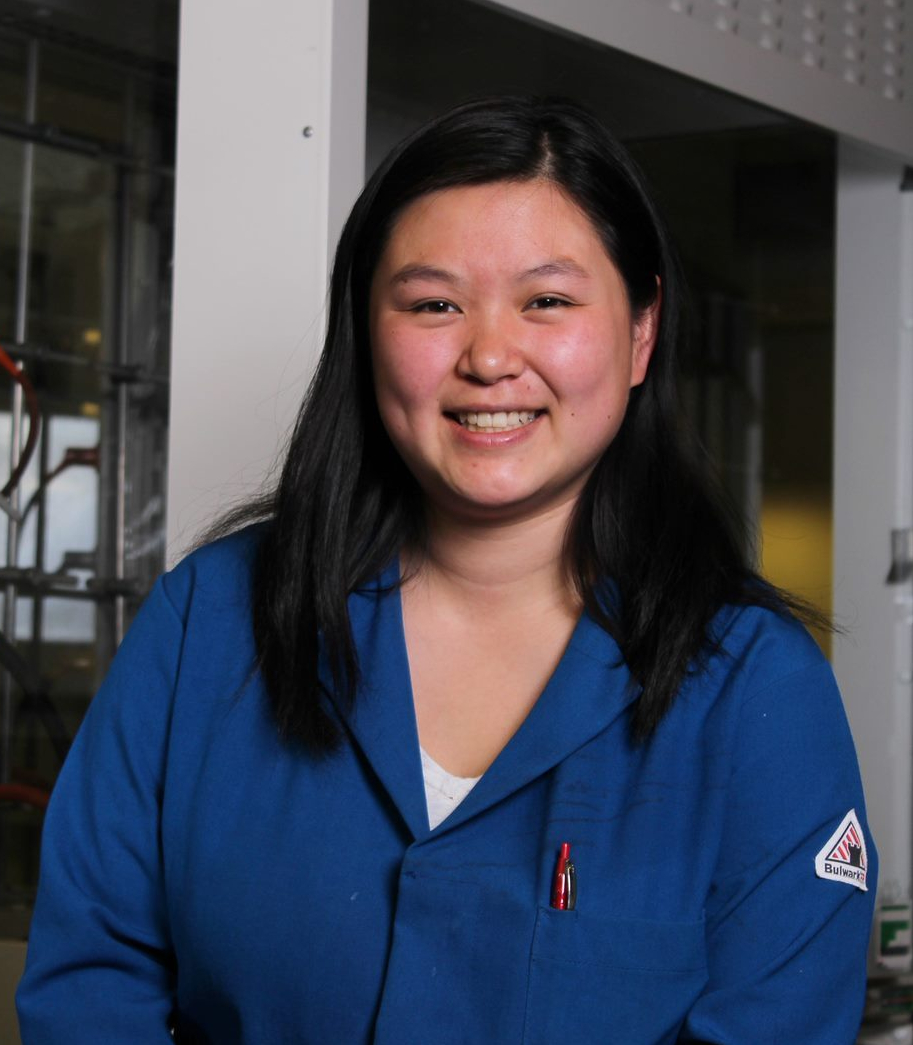
Hello! I’m the second instalment of the Sung Sister duo.
I completed my PhD in Chemistry at the University of Toronto under the supervision of Prof. Robert Morris in 2020. My doctoral research focussed on the design of catalysts and how we can predict the reactivity of metal-hydrides through ligand design.
I am now based in Vancouver where I work in the BioTech industry.
Like Vanessa, I am passionate about the intersections of science and policy and was named to the inaugural Youth Advisory Council to the Chief Science Advisor of Canada. I served my term from 2020-2023 during which our cohort published a report titled Our Vision for Science: Perspectives from the Chief Science Advisor of Canada’s Youth Council. In this report, we outline our hopes for the future of Canadian science as well as provide suggestions to tackle what we consider to be some of the biggest challenges facing young scientists.
My Doctoral Research
My PhD thesis focussed on the efficient design of metal-based hydrogenation catalysts. My supervisor, Prof. Robert Morris, developed a method that helps us accurately predict the pKa values of metal-hydrides. To do so, “ligand acidity constants” are assigned to classes of ligands which can be added together to predict the overall acidity of the hydride.
Much of my work was in proving the accuracy of this method computationally through Density Functional Theory. I also worked toward expanding the applicability of the method to more ligands. You can read more about my work here:
Ligand acidity constants as calculated by density functional theory for PF3 and N-Heterocyclic carbene ligands in hydride complexes of Iron(II): Link
Density Functional Theory Calculations Support the Additive Nature of Ligand Contributions to the pKa of Iron Hydride Phosphine Carbonyl Complexes: Link
You can find out a bit more about what Bob’s research group does here.
My Writing
When I have time, I also do a little bit of writing for causes I care about. Here are pieces that I have published for a various types of audiences.
The Canadian Chemical News: STEM education meets social priorities
Science Borealis: Science advocacy can save Canadian science (and the next generation of Canadian scientists)
Green Chemistry Initiative Blog: Veggie (Scrap) Tales – Are plant-based polymers the answer to our plastic conundrum?
Volunteer Experience
Outside of the lab, I spend a lot of my time thinking about science and society, and about policy and politics. I learned fairly early on in my degree that I wanted to be involved in this aspect of science and spent a lot of time building a framework to provide UofT students opportunities to grow in that space.
The Toronto Science Policy Network
In the summer of 2018, I co-founded the Toronto Science Policy Network (TSPN) with the goal of providing the University of Toronto community to learn more about and engage in science policy. We run science policy related workshops such as Policy Writing 101, Science Advocacy 101, and Science Policy 101, and we host public panel discussions on relevant topics like climate change, and sex-education.
I was interviewed about my experience creating the group at the Canadian Science Policy Conference in November, 2018.
Learn more about TSPN here.
The Chemical Institute of Canada
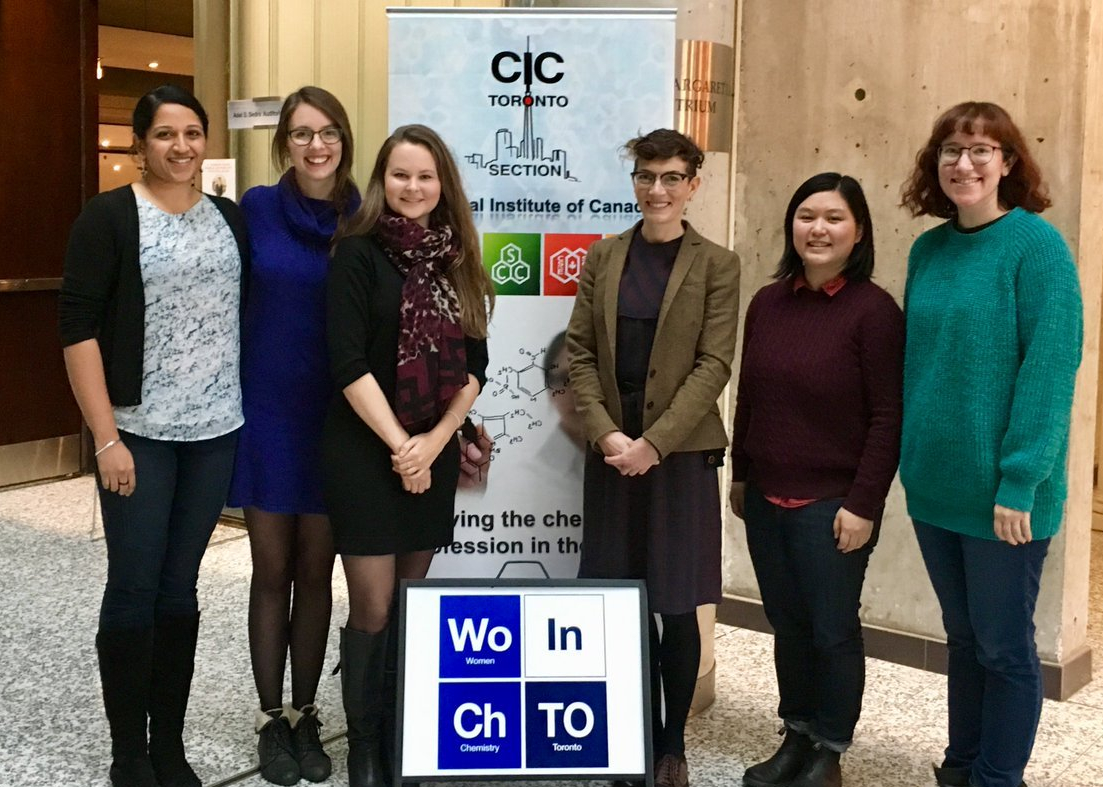
The Chemical Institute of Canada – Toronto Section (CIC-Toronto) is a professional society that aims to connect chemical and chemical engineering professionals from across the Greater Toronto Area. I first joined the Chemical Institute of Canada in 2015 as a volunteer and have since had stints as Chair, Vice-Chair, Government Liaison, and Events Coordinator. Some of my proudest achievements at CIC are creating the CICTor Votes program, bringing Prof. Polly Arnold to town for the E. Gordon Young Lecture Series, and creating the CIC-Toronto/Women in Chemistry-TO Mentorship Program.
Learn more about CIC-Toronto here.
University of Toronto – Green Chemistry Initiative
The Green Chemistry Initiative (GCI) was created in 2012 by chemistry graduate students at the University of Toronto to promote sustainability in chemical research and education. We run workshops, seminars, a blog, and an annual symposium. As part of the GCI, I was appointed to the Joint Health and Safety Committee in the Chemistry Department and helped lead the GCI Safety Projects.
Learn more about the Green Chemistry Initiative here.
 The Sung Sisters